Overrun
A downloadable game for Windows and macOS
Overrun is a third-person 3D survival roguelite built by a team of autonomous AI agents. Every design in it was invented by its two human developers: the game and its mechanics, the heroes with their looks and personalities, the weapons, abilities and enemies. The developers hand these to the agents as requests and feedback in a group chat, and the agents build them: they write the code, make the 3D models, rigs and animation, test the game and tune its balance. It has been in development since September 2026.
The game
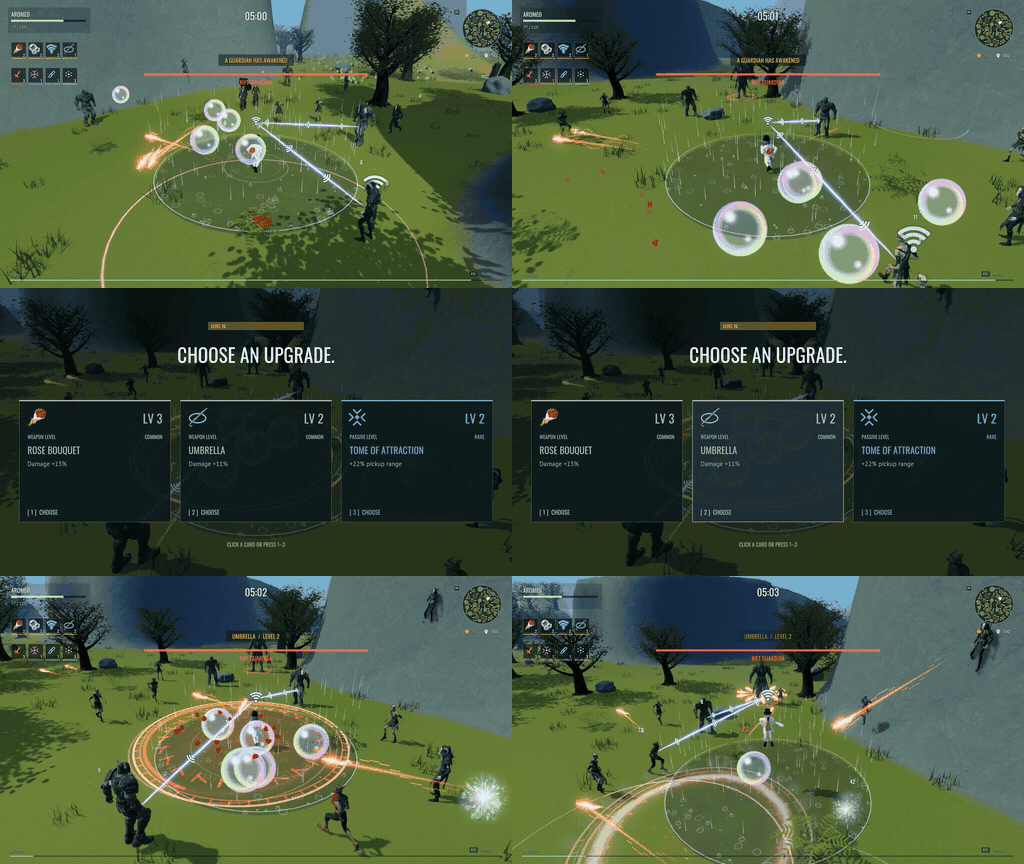
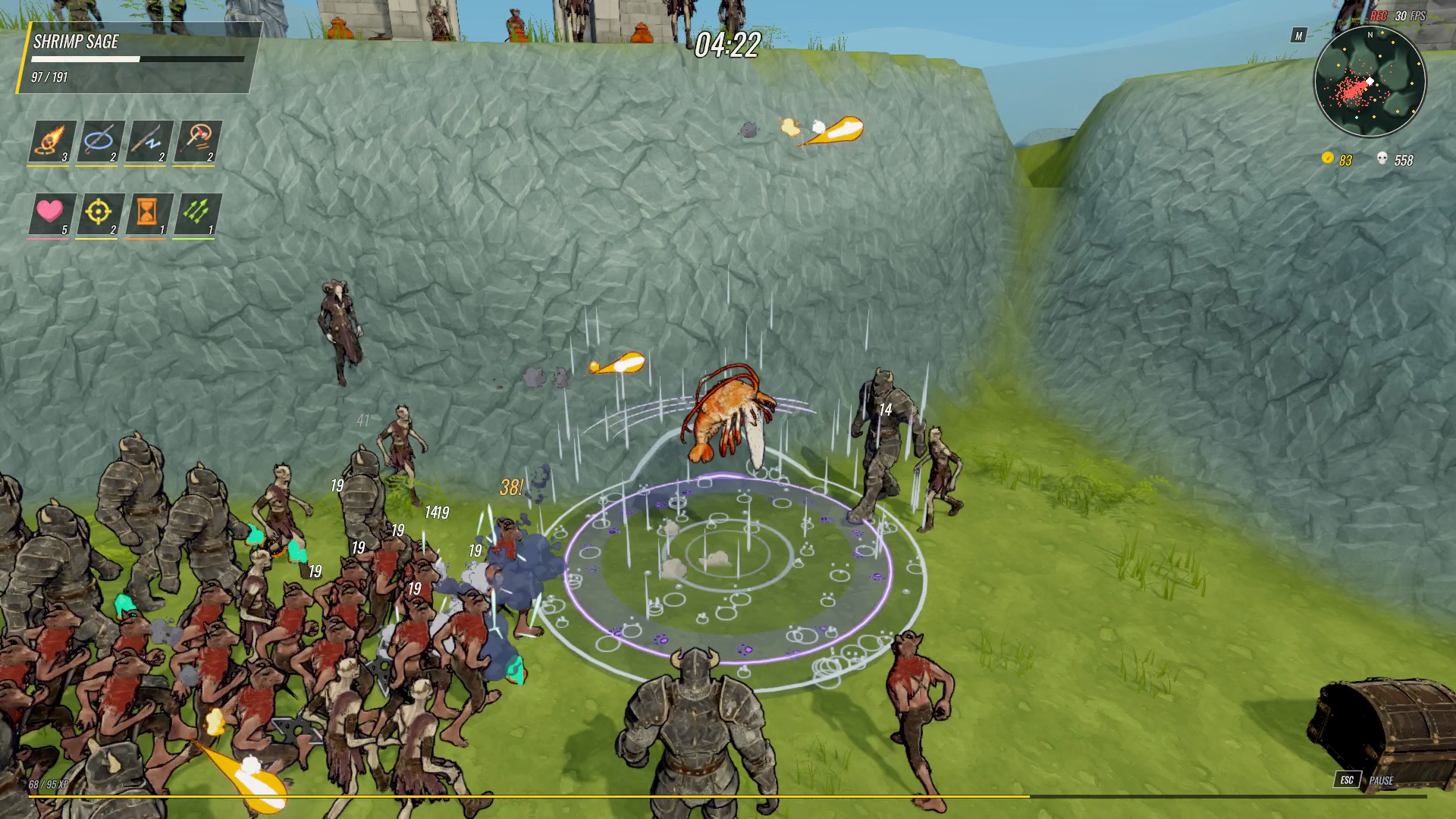
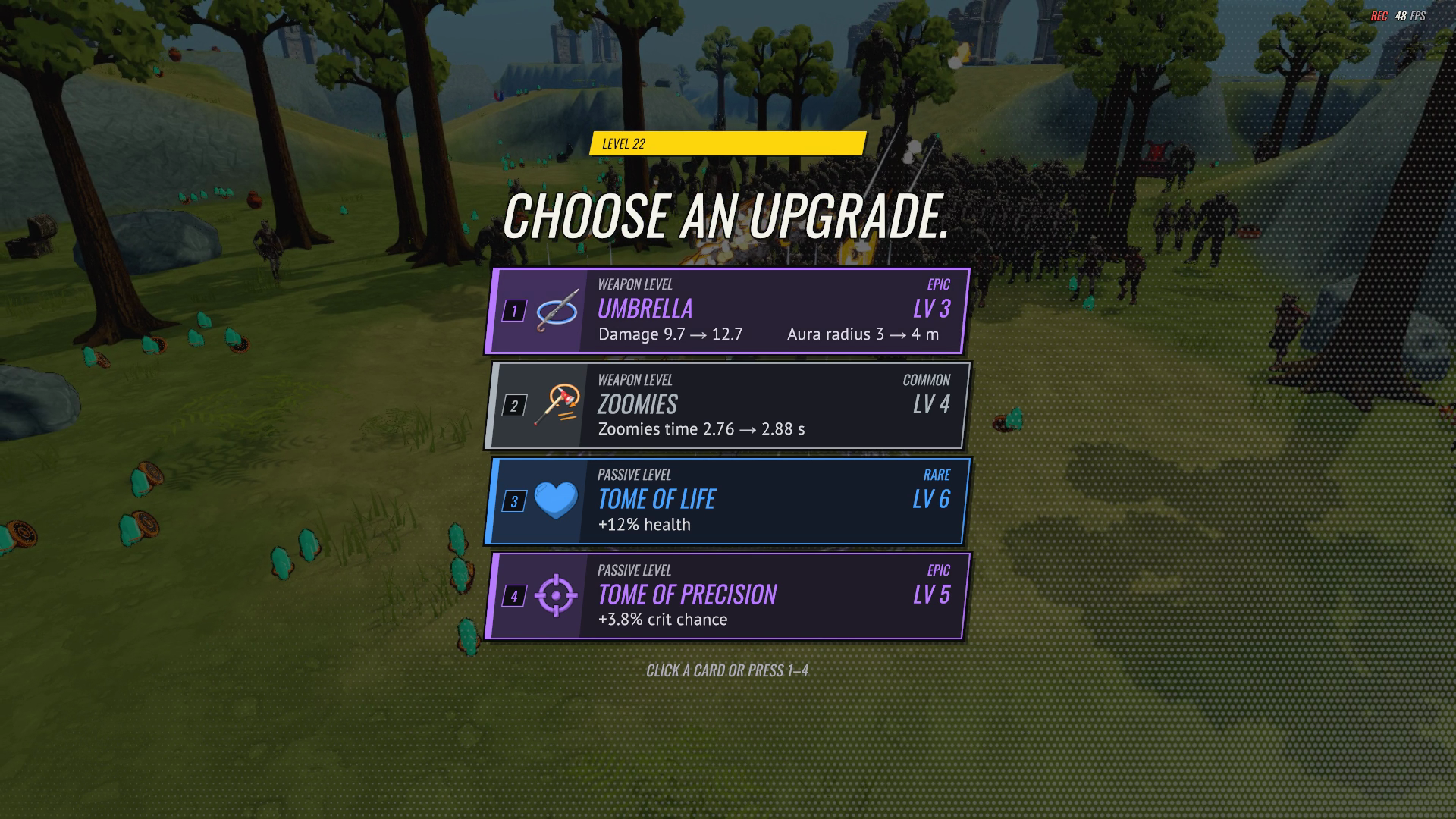
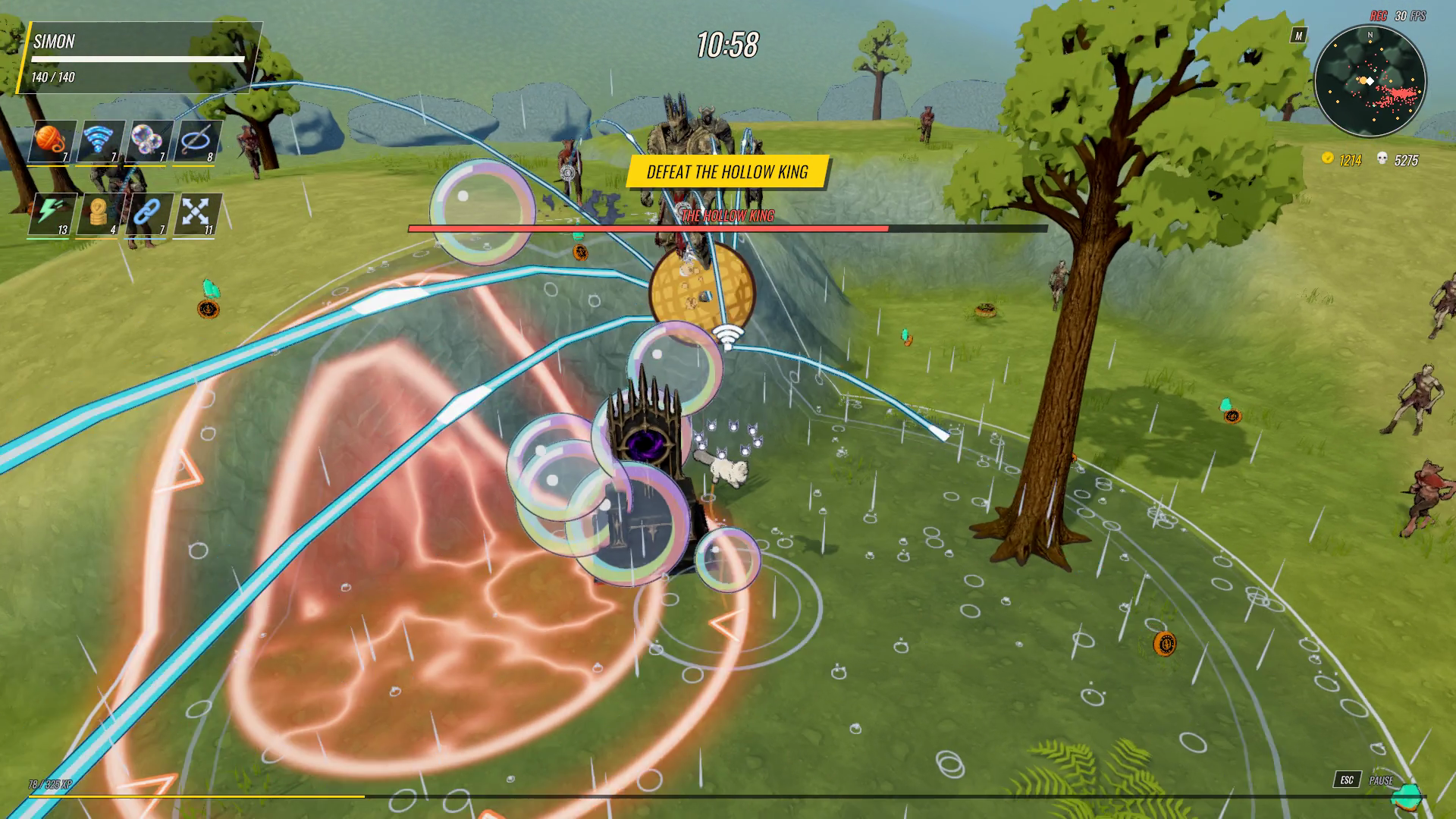
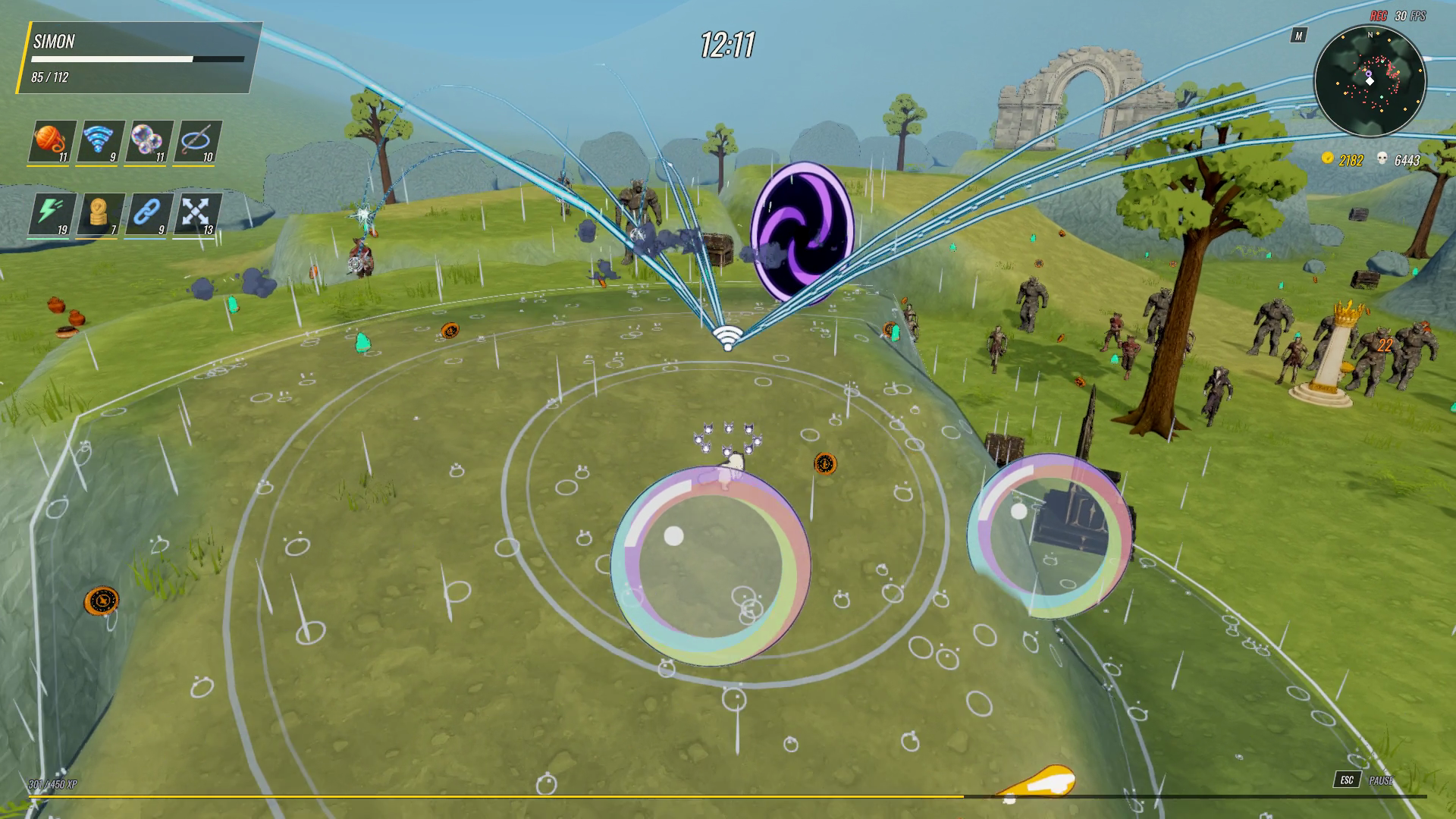
Pick a hero and survive in the Outlands. Your weapons strike on their own: you run, jump and collect experience. Every level-up offers cards: a new weapon, a weapon upgrade or a stat tome; upgrades and tomes come in four rarities, from common to legendary. A run holds up to four weapons and four tomes. Chests hold items and shrines heal. Rift guardians arrive at 5:00 and 7:00, and at 10:00 the Hollow King enters the arena. Defeat him to win and unlock the next biome.
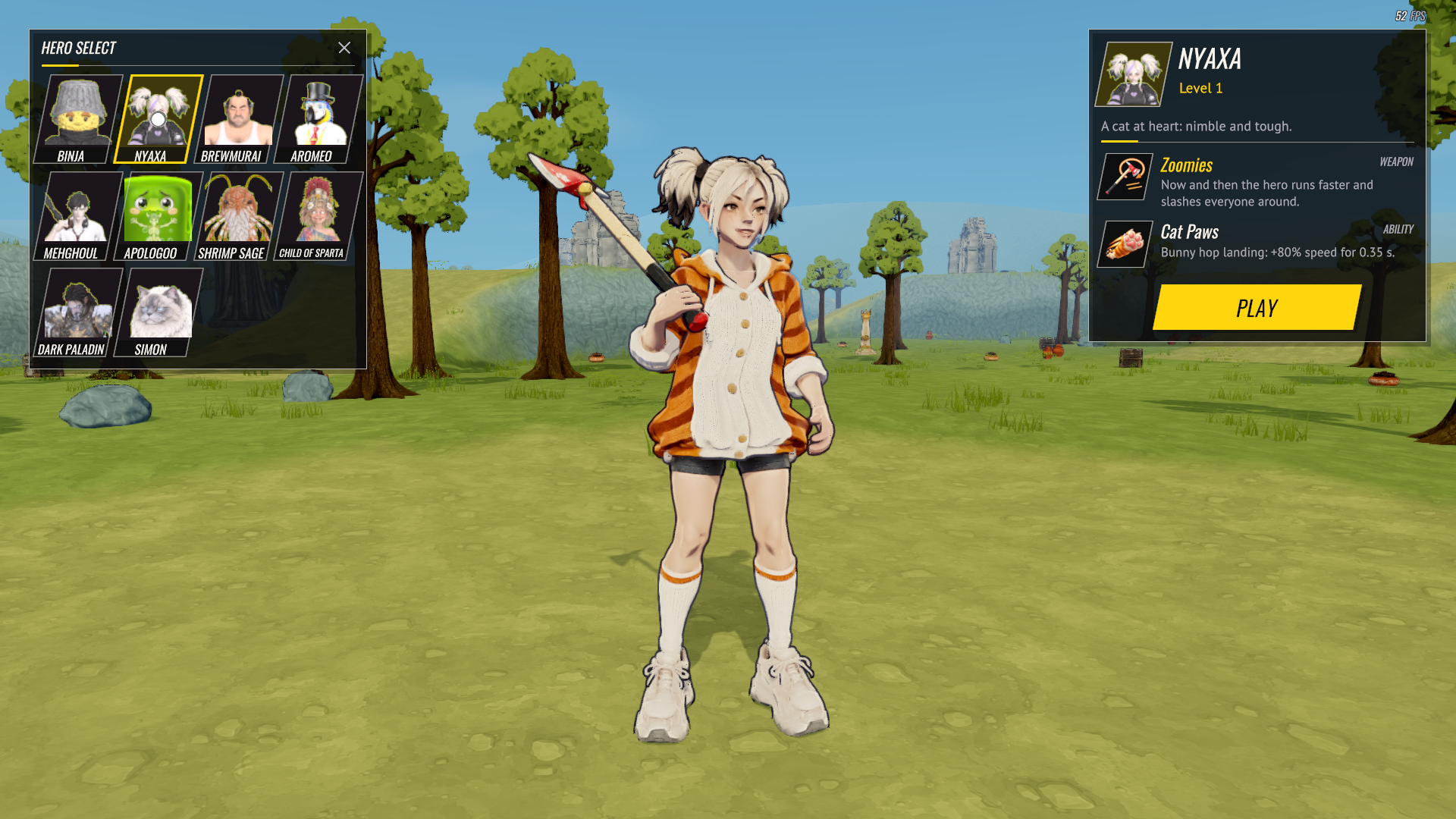
Ten heroes, each with a starting weapon and an ability of their own. Among them: Brewmurai, the toughest but slow; Nyaxa, a cat at heart with an axe; Aromeo, a gentleman who fights with roses; Apologoo, a toxic slime cube who is terribly sorry about it; a shrimp sage who sees the future; a dark paladin who won't stop scrolling his phone even mid-fight; and Simon, a lazy fluffy cat.
How it is made
- Tasks from a chat. The developers write in a Telegram group. An orchestrator reads it, a dispatcher agent turns messages into tasks, and each task runs as its own Claude agent session; several run at once in the same project and take turns with Unity, Cascadeur and git. Every task gets a ticket on a Kanban board, ends in one commit and reports back to the chat with screenshots and videos.
- Rules, not approvals. The developers' decisions are written down as rules the agents follow: which tools may be used, do only what was asked, show game mechanics honestly in videos. Agents don't wait for sign-off: a task is done when the agent's own checks and visual review pass, and changes come later as new tasks.
- Game design. The designs are the developers' own; the agents keep a game-design wiki with pages for heroes, enemies, weapons, stats and balance in sync with the game's config. The config is the source of truth; numbers edited on the wiki can be read back into the game on request.
- Balance. The latest rebalance was solved with a deterministic model of a 10-minute run, computed second by second from the game's config: enemy health and waves, weapon numbers, card rarities and the level curve.
- 3D models. New characters are generated with Hyper3D Rodin (earlier ones came from Meshy) from reference images the agents make with an image model and inspect themselves: an open T-pose with gaps under the arms and between the fingers, a front view and a real side view. Agents never model geometry by hand; they only repair the generated mesh in Blender.
- Rigs. Skeletons, skin weights and weapon grips are made by the agents themselves, with no auto-rigging services, Mixamo or ready-made rigs. The control rig for animation is built in Cascadeur on that skeleton.
- Animation. Motion is authored in Cascadeur with its own tools: AutoPosing for key poses, Motion Generation or AI Inbetweening for the frames between them, the Physics Corrector for balance and momentum and Secondary Motion for the body's inertia, never with stock clips or motion libraries. Older clips are being redone this way one character at a time. In Unity, spring bones swing tails, hair, ears and cloaks.
- Checks. Every clip goes through AnimQA, automatic checks for joints bent past anatomy, limbs passing through the body or the floor, sliding feet, pops and skin tears, and AnimCraft scores it on animation principles such as arcs, easing, weight and overlap. Then the agent reviews renders from several sides and the result in the game itself: numbers alone never count as a visual check.
- Interface and sound. Interface concepts are drawn as a layer over real game screenshots; the game graphics are never regenerated. Sound effects and music are synthesized in code.
Builds for Windows and macOS are below. The macOS build is not notarised: the first time, right-click the app and choose Open.
This page, its text included, was prepared by an AI agent; the screenshots and the animation are real frames from the game.
Credits: fonts Oswald and PT Sans (SIL Open Font License); forest ground and bark textures from Poly Haven (CC0).
Download
Install instructions
Download, unzip and run the game. Windows: Overrun.exe. macOS: Overrun.app is not notarised; the first time, right-click it and choose Open.
Leave a comment
Log in with itch.io to leave a comment.